





Enter your VAT number here and click Verify:
Your details have been verified. VAT number registered to:
,
.
Your order will now be zero rated for VAT purposes. We reserve the right to verify these details after your order request has been made and reinstate VAT if required.
Your VAT details were not recognised or were invalid. Your VAT number must be matched to your Billing Country as specified above. This is currently specified as . You do not need to enter the country code part of your VAT number as this has already been selected in your billing address details above.
The VAT number checking service is currently offline. Please supply your VAT details within the comments or special instructions field below and we will apply a VAT discount after placing your order request.

- Accessories
- Brakes
- Chassis / Bodywork
- Clothing & Gifts
- Electrical & Relays
- Engine Cooling
- Engine Electrical
- Engine Rebuild Parts
- Engine Tuning
- Exhausts
- Exterior Styling / Spoilers
- Gearbox / Transmission
- Heating / Air Conditioning
- Hydraulics
- Incar / Multimedia
- Interior & Accessories
- Lighting
- Mats & Carpets
- Motorsport and Off-Road
- Parts for Other Cars
- Pedal Cluster
- Rubber Seals
- Seats & Seat Belts
- Service Parts
- Special Offer Parts
- Steering Parts
- Suspension & Axle
- Suspension Upgrades
- Tyres
- Wheel Accessories
- Wheels

 OE Match
Crankshaft Standard (STD)
The
standard size crankshafts are key rotating components used in Porsche 993
engines and 996 Turbo models.
Fits:
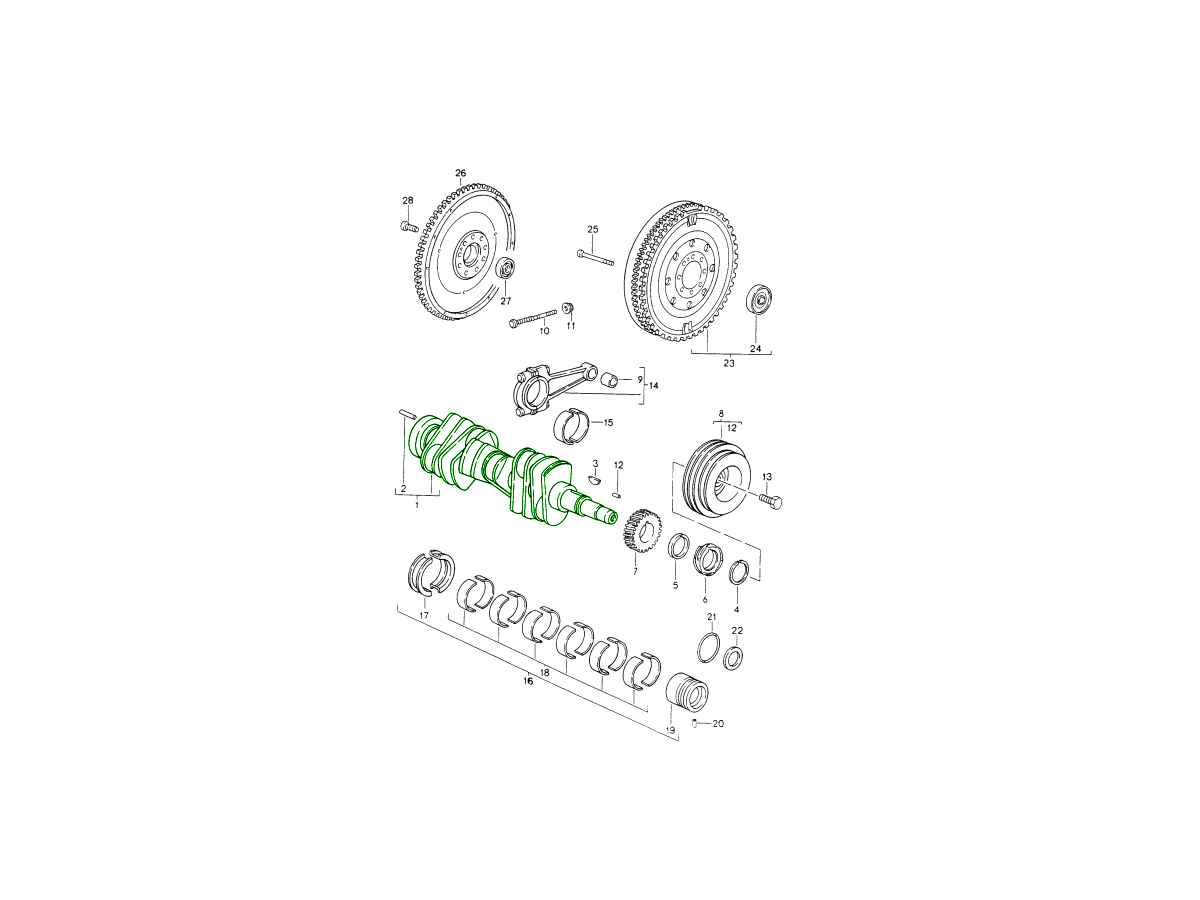
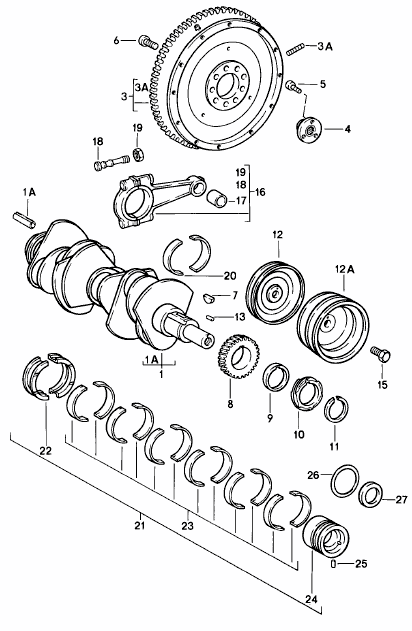
Diagram ref no 1
The crankshaft delivers the precise journal dimensions, balance and strength needed for the high-performance flat-six architecture. Designed to maintain original tolerances, a standard-size crankshaft ensures correct bearing clearances, smooth rotation and reliable power delivery—crucial for both road and track-driven Porsches.
For any engine rebuild, restoration or major service involving these models, choosing a correctly machined and precision-balanced standard size crankshaft is essential to restoring authentic performance and long-term reliability.
What These Standard Size Porsche Crankshafts Do
Designed to work at the core of the bottom end
assembly, these crankshafts:
- Convert piston movement into rotational torque to power the drivetrain
- Maintain exact journal diameters for correct bearing oil film clearance
- Provide engine balance across all RPM ranges—crucial for high-revving Porsche flat-six engines
- Facilitate internal lubrication via precision oil galleries
- Support smooth, strong and consistent power delivery Ensure structural integrity under boost conditions in 996 turbo engines
These crankshafts are engineered to perform reliably under demanding thermal, mechanical and load environments typical of Porsche performance models.
Why Porsche 993 & 996 turbo Crankshafts Can Fail
Even though Porsche flat-six crankshafts are
exceptionally robust, years of use, high RPM and turbocharged forces can lead
to failure. Common causes include:
- Oil starvation or low pressure causing severe journal scoring
- Bearing shell failure damaging journals and lubrication paths
- Metal fatigue from aggressive driving, detonation or over-boost scenarios
- Overheating weakening the crankshaft material
- Contamination in oil scoring journals and reducing bearing life
- Imbalance from previous poor machining or unbalanced accessories
- High mileage fatigue affecting torsional stability
Symptoms of failure include persistent vibration, knocking noises, falling oil pressure, bearing debris in oil or visible wear during teardown.
Why You
Should Replace a Worn Crankshaft
Replacing a damaged crankshaft with a precision-built
standard size alternative engineered to match original performance
characteristics is crucial to achieving a reliable and long-lasting Porsche
engine rebuild.
Key benefits of replacement include:
- Restored correct bearing clearances for stable oil pressure
- Smoother rotation and reduced engine vibration
- Improved reliability for high-load, high-RPM and turbocharged conditions
- Prevention of catastrophic bottom-end failures
- Extended service life for bearings, rods and pistons
- Enhanced performance consistency and engine smoothness
With Porsche 993 and 996 Turbo engines now highly valued by enthusiasts, a precision crankshaft is foundational to any proper rebuild or restoration.
Related reference numbers
Related, superseded, cross reference or alternative numbers for comparison.
99310202102
The product you are viewing cross references to these numbers
- Porsche 993 (911) C2 1994-97
- Porsche 993 (911) C4 1994-97
- Porsche 993 (911) RS 1994-97
- Porsche 993 (911) C2S 1994-97
- Porsche 993 (911) C4S 1994-97
- Porsche 993 (911) TURBO 1994-96
- Porsche 993 (911) GT2 1994-97
- Porsche 993 (911) TURBO S 1994-97
- Porsche 996 TURBO 2000-05
- Porsche 996 GT2 2001-05
 Shop Securely
 12 Month Warranty
 Worldwide Delivery
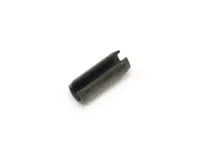



Fits:
Porsche 911 Carrera 3.2L 1984-89
Porsche 924S 1986-88
Porsche 944 1982-91
Porsche 968 1992-95
Porsche 964 1989-94
Porsche 993 1994-98
Porsche 996 Turbo / GT2 / GT3 1999-05
Porsche 997 Carrera 2009-12
Porsche 997 Turbo / GT2 2007-09
Porsche 997 Turbo / GT2 RS 2009-14
Porsche 997 GT3 2007-13
Porsche 981 Boxster 2013>>
Porsche 987 Boxster 2009-12
Porsche 981C Cayman 2014>>
Porsche 987C Cayman 2009-13
Porsche 991 Carrera / 991 Turbo / 991 GT3
Click 'Zoom in' for large parts diagram.
Diagram ref no 1A
Related reference numbers
Related, superseded, cross reference or alternative numbers for comparison.
90009503100
The product you are viewing cross references to these numbers
- Porsche Boxster 987 MKII 2.9L 2009-12
- Porsche Boxster S 987 MKII 3.4L 2009-12
- Porsche Boxster 981 2.7L 2012-16
- Porsche Boxster 981 S / GTS 3.4L 2012-16
- Porsche 911 1984-1986 3.2L
- Porsche 911 1987-1989 3.2L G50
- Porsche 964 (911) C2 1989-93
- Porsche 964 (911) C4 1989-93
- Porsche 964 (911) RS 3.6L 1991-93
- Porsche 964 (911) RS 3.8L 1991-93
- Porsche 964 (911) TURBO 3.3L 1991-93
- Porsche 964 (911) TURBO 3.6L 1991-93
- Porsche 993 (911) C2 1994-97
- Porsche 993 (911) C4 1994-97
- Porsche 993 (911) RS 1994-97
- Porsche 993 (911) C2S 1994-97
- Porsche 993 (911) C4S 1994-97
- Porsche 993 (911) TURBO 1994-96
- Porsche 993 (911) GT2 1994-97
- Porsche 993 (911) TURBO S 1994-97
- Porsche 996 TURBO 2000-05
- Porsche 996 GT2 2001-05
- Porsche 996 GT3 MKI 1999-02
- Porsche 996 GT3 MKII 2003>>
- Porsche 996 GT3 RS 2003-04
- Porsche 997 MK1 Carrera 2 3.6L 2005-08
- Porsche 997 MK1 Carrera 2S 3.8L 2005-08
- Porsche 997 MK1 Carrera 4 3.6L 2005-08
- Porsche 997 MK1 Carrera 4S 3.8L 2005-08
- Porsche 997 MK1 TURBO 2007-09
- Porsche 997 MK1 GT3 2007-09
- Porsche 997 MK1 GT2 2007-09
- Porsche 997 MKII GT3 2010-11
- Porsche 997 MKII Turbo 2010-13
- Porsche 997 MKII GT2 RS 2011-13
- Porsche 991.1 Carrera C2 3.4L (350 Bhp) 2012-16
- Porsche 991.1 Carrera C2S / GTS 3.8L (400/430 Bhp) 2012-16
- Porsche 991.1 Carrera C4 3.4L (350 Bhp) 2012-16
- Porsche 991.1 Carrera C4S / GTS 3.8L (400/430 Bhp) 2012-16
- Porsche 991.1 Turbo 3.8L (520 Bhp) 2014-16
- Porsche 991.1 Turbo S 3.8L (560 Bhp) 2014-16
- Porsche 991.1 GT3 3.8L (475 Bhp) 2014-16
- Porsche Cayman 2.9L 987C MKII 2009-12
- Porsche Cayman S / R 3.4L 987C MKII 2009-12
- Porsche Cayman 2.7L 981 2013-16
- Porsche Cayman S / GTS 3.4L 981 2013-16
- Porsche 924S 2.5L 1986-87
- Porsche 924S 2.5L 1988
- Porsche 944 2.5L 8V 1982-87
- Porsche 944 2.7L 8V 1988-89
- Porsche 944S 2.5L 16V 1987-88
- Porsche 944S2 3.0L 16V 1989-91
- Porsche 944 Turbo 2.5L 8V 1985-88
- Porsche 944 Turbo 2.5L 8V 1989-91
- Porsche 944 Turbo S 2.5L 8V 1988
- Porsche 968 3.0L 1992-94
- Porsche 968 Sport 3.0L 1994-95
- Porsche 968 CS 3.0L 1993-95
- Porsche 968 Turbo S 3.0L 1993-94
Shop Securely
12 Month Warranty
Worldwide Delivery
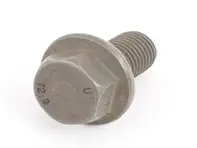
Fits:
Porsche 911 1965-89
Porsche 914 1970-76
Porsche 964 Turbo 3.3L 1991-92
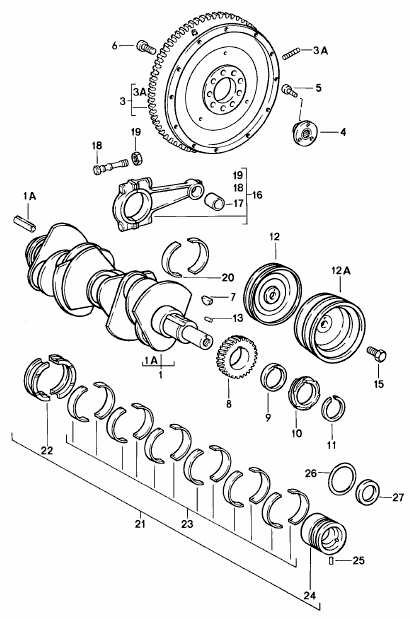
Click 'Zoom in' for large parts diagram
Diagram ref no 15
Related reference numbers
Related, superseded, cross reference or alternative numbers for comparison.
99909300502
The product you are viewing cross references to these numbers
- Porsche 911 1965-1968 2.0L / 912 SWB (F)
- Porsche 911 1968-1973 2.2L / 2.4L / 2.7L RS LWB (F)
- Porsche 911 1974-1977 2.7L / 1976-77 3.0 Carrera
- Porsche 911 1978-1983 3.0L / SC
- Porsche 911 1984-1986 3.2L
- Porsche 911 1987-1989 3.2L G50
- Porsche 911 1975-1977 3.0L Turbo (930)
- Porsche 911 1978-1989 3.3L Turbo (930)
- Porsche 964 (911) TURBO 3.3L 1991-93
- Porsche 914 (1970-1976)
Shop Securely
12 Month Warranty
Worldwide Delivery
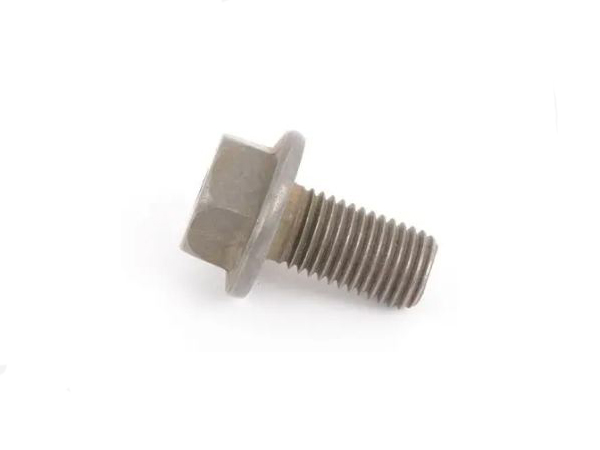
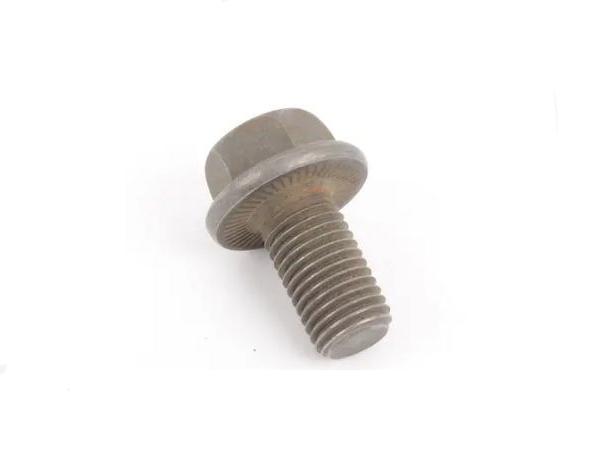
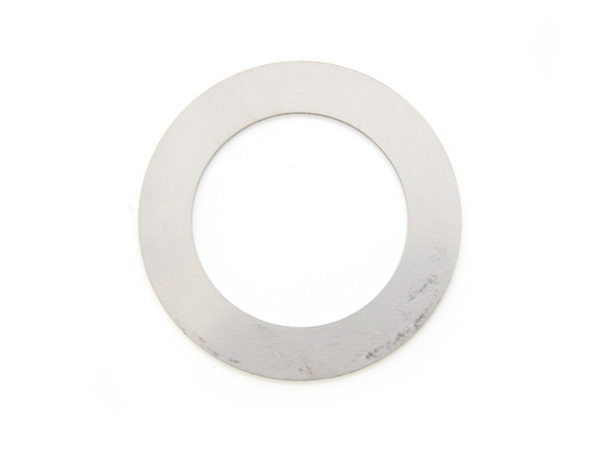
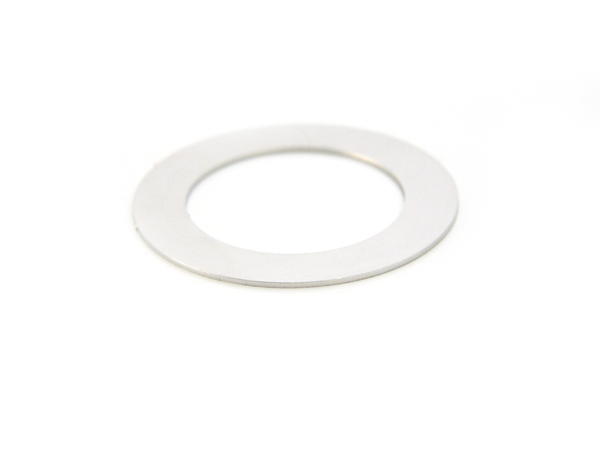
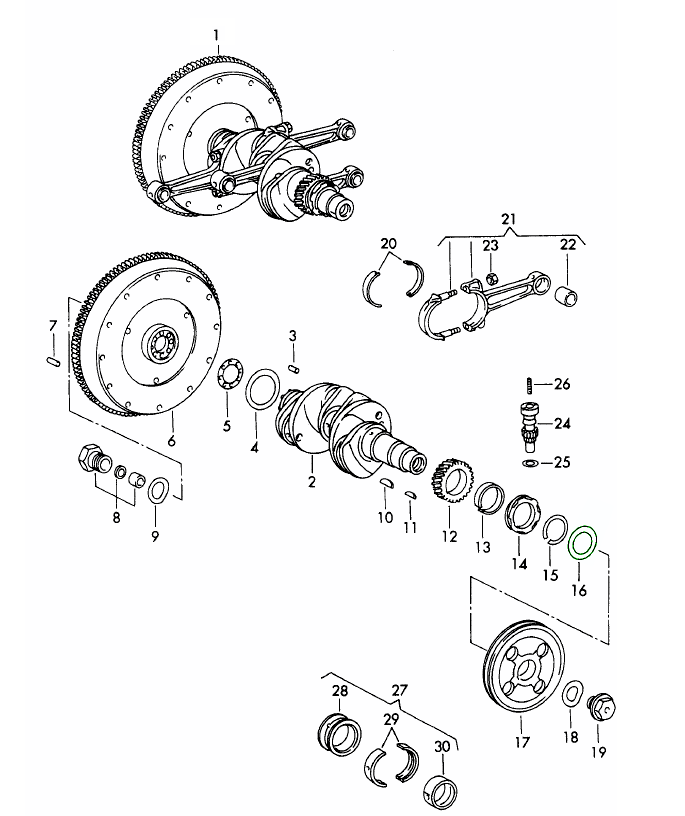
Fits:
Porsche 356 1950-65
Porsche 912 1965-69
Click 'Zoom in' for large parts diagram.
Diagram ref no 16
Related reference numbers
Related, superseded, cross reference or alternative numbers for comparison.
61610216301
The product you are viewing cross references to these numbers
- Porsche 911 1965-1968 2.0L / 912 SWB (F)
- Porsche 356 1950-55
- Porsche 356A 1955-59
- Porsche 356B 1959-63
- Porsche 356C 1963-65
Shop Securely
12 Month Warranty
Worldwide Delivery

Monday-Friday: 8.30am - 5.30pm (GMT)
Saturday: Closed
Sunday: Closed